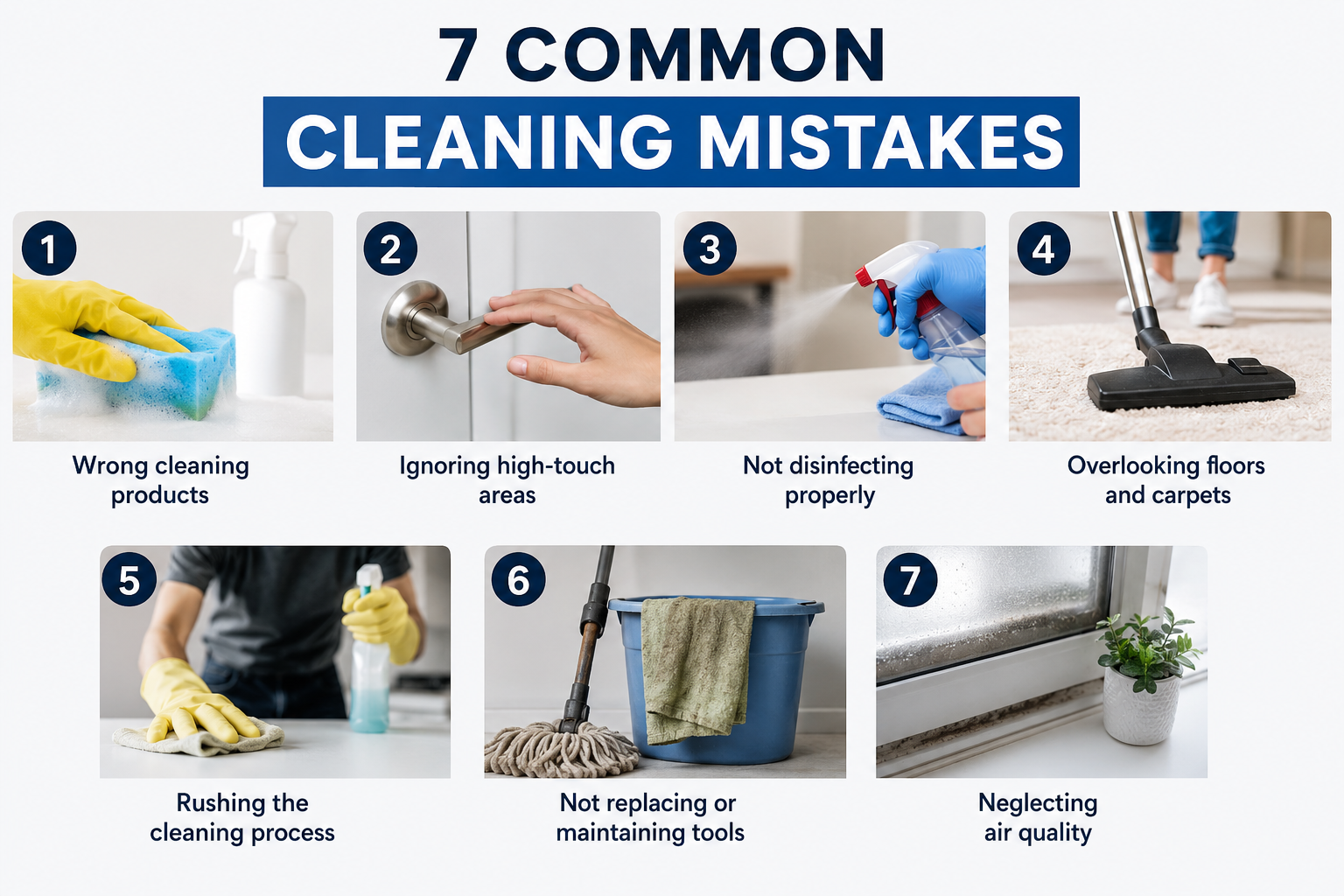
Mistake 1: Using the Wrong Cleaning Products
One of the most common cleaning mistakes is using products that aren’t suitable for the surface. For example:
- Using abrasive cleaners on wood floors can cause scratches
- Pouring bleach directly on certain countertops can damage the finish
- Using regular cleaners on electronics can cause malfunctions
How to Avoid It:
- Always read product labels and check compatibility with surfaces
- Use pH-neutral cleaners for delicate surfaces
- Invest in microfiber cloths for electronics and sensitive areas
Pro Tip: A little research goes a long way. Using the wrong cleaner may require re-cleaning, wasting time and effort.
Mistake 2: Ignoring High-Touch Areas
High-touch areas are hotspots for germs and bacteria, yet many people overlook them during regular cleaning. Common neglected spots include:
- Door handles and light switches
- Telephones and keyboards
- Elevator buttons and handrails
How to Avoid It:
- Make a checklist of high-touch surfaces and sanitize them daily
- Use disinfectant wipes or sprays approved for those surfaces
- Encourage employees or household members to wipe personal items regularly
Key Insight: Ignoring these areas leads to the spread of illness, increased sick days, and poor hygiene.
Mistake 3: Not Following Proper Disinfecting Techniques
Many people think spraying a surface with disinfectant is enough, but proper disinfecting requires specific steps:
- Clean the surface of visible dirt first
- Apply disinfectant evenly and allow the recommended dwell time
- Use clean cloths or disposable wipes to avoid cross-contamination
How to Avoid It:
- Follow instructions on disinfectant products carefully
- Use separate cloths for different areas (bathroom, kitchen, office)
- Consider professional sanitization services for high-risk areas
Insight: Simply wiping doesn’t kill all germs. Proper technique ensures surfaces are truly sanitized.
Mistake 4: Overlooking Floors and Carpets
Floors and carpets accumulate dirt, dust, and allergens. Many people skip regular vacuuming or deep cleaning, which affects air quality and hygiene.
How to Avoid It:
- Vacuum carpets at least twice a week in high-traffic areas
- Mop hard floors daily or as needed
- Schedule periodic deep cleaning for carpets and rugs
Pro Tip: Dirty floors contribute to allergies, respiratory issues, and a less professional environment.
Mistake 5: Rushing the Cleaning Process
Cleaning too quickly is a frequent cleaning mistake. When people rush, they often miss spots or perform tasks improperly.
How to Avoid It:
- Break tasks into daily, weekly, and monthly routines
- Focus on one area at a time for thorough cleaning
- Use a checklist to ensure nothing is skipped
Key Insight: A structured cleaning routine prevents errors and improves overall hygiene.
Mistake 6: Not Replacing or Maintaining Cleaning Tools
Dirty or worn-out tools can hinder cleaning and spread bacteria. Common examples:
- Using old sponges and cloths that harbor germs
- Not changing vacuum filters or mop heads regularly
- Using harsh brushes that damage surfaces
How to Avoid It:
- Replace sponges, cloths, and mop heads frequently
- Maintain vacuums and other equipment according to manufacturer instructions
- Store cleaning tools properly to avoid contamination
Pro Tip: Clean tools work better. Dirty tools undo your efforts and may worsen contamination.
Mistake 7: Neglecting Air Quality
Many people focus solely on visible surfaces and forget air quality. Dust, allergens, and poor ventilation can undermine the benefits of cleaning.
How to Avoid It:
- Dust vents, fans, and air filters regularly
- Open windows when possible to allow airflow
- Use air purifiers in spaces prone to allergens
Insight: A clean office or home isn’t just about surfaces—clean air is essential for overall health and productivity.
How to Create an Effective Cleaning Routine
To prevent these common mistakes, follow a structured approach:
Step 1: Make a Checklist
Include daily, weekly, and monthly tasks. Highlight high-touch areas and specialty surfaces.
Step 2: Train Cleaning Staff or Household Members
Ensure everyone knows proper techniques, safe product use, and the importance of consistency.
Step 3: Use Professional Services When Needed
For carpets, floors, electronics, and deep sanitization, professional cleaning services can eliminate hard-to-reach dirt and germs.
Step 4: Monitor and Adjust
Regularly review your cleaning routine. Track areas often missed and adjust the checklist accordingly.
Benefits of Avoiding Cleaning Mistakes
- Healthier Environment: Fewer germs and allergens improve overall wellbeing
- Time and Cost Efficiency: Proper techniques reduce the need for repeated cleaning
- Enhanced Productivity: Employees work in a clean, organized, and distraction-free space
Professional Appearance: Clean environments leave a positive impression on clients and visitors